What is a gram stain kit (3-step)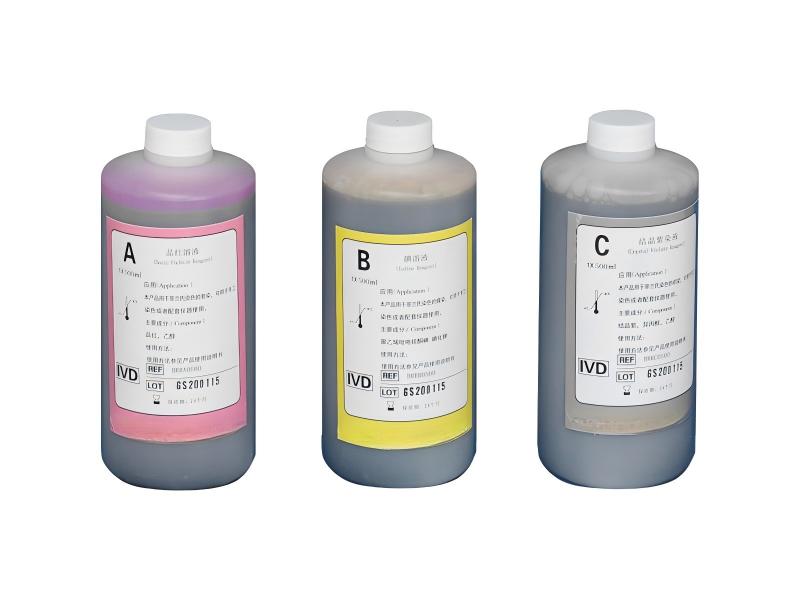
gram stain kit (3-step) is mainly applied for gram staining procedures in microbiology laboratories.Gram Stain Kit (3-step) Product Specifications| product name | specification | unit | shelf life | remarks |
|---|
| gram stain kit (3-step) | 3*100ml | box | 2 years | ideal choice for microbiology laboratories in clinical testing | | gram stain kit (3-step) | 3*250ml | box | 2 years | | | gram stain kit (3-step) | 3*500ml | box | 2 years | |
Principle of Inspection
gram staining method was created in 1884 by danish physician hans christian gram. gram-positive bacteria feature thick cell walls with abundant, tightly cross-linked peptidoglycan layers. after gram staining, the crystal violet-iodine complex can be firmly retained inside cell walls and hardly washed away by decolorizer, presenting purple color. based on this mechanism, the gram stain kit was developed. gram staining is a widely used differential staining technique (counterstain method) in bacteriology. it works for specimen smears and colony smears. staining creates sharp contrast between bacteria and background, enabling clear observation of bacterial morphology, arrangement and structural features for clinical classification and identification. bacteria are divided into two groups by staining results: gram-positive bacteria (purple) and gram-negative bacteria (red). this rapid 3-step gram stain kit shortens staining duration. the whole staining process takes only about 1 minute, with nearly no false-negative results. it serves as an optimal option for microbiology laboratories in clinical testing. main components
| reagent | main ingredients |
|---|
| crystal violet solution | crystal violet, ethanol | | gram's iodine solution | iodine, potassium iodide | | decolorizer | acetone, ethanol | | safranin solution | safranin, ethanol |
storage conditions and shelf life
unopened reagents have a shelf life of 24 months. once opened within the valid period, the solutions should be used up within 6 months. tightly cap the bottle after each use to prevent volatilization and deterioration.
store reagents at 5Celsius - 30Celsius, well ventilated environment with relative humidity not more than 80% and no corrosive gas.
specimen requirements
handle smear preparation carefully to produce thin, uniform smears. prepared slides should air-dry naturally. if heat fixation is adopted, avoid excessive temperature (the back of slide should feel warm but not hot against the back of hand). overheating may alter bacterial morphology and interfere observation results. |